
What Will Result from this Study?
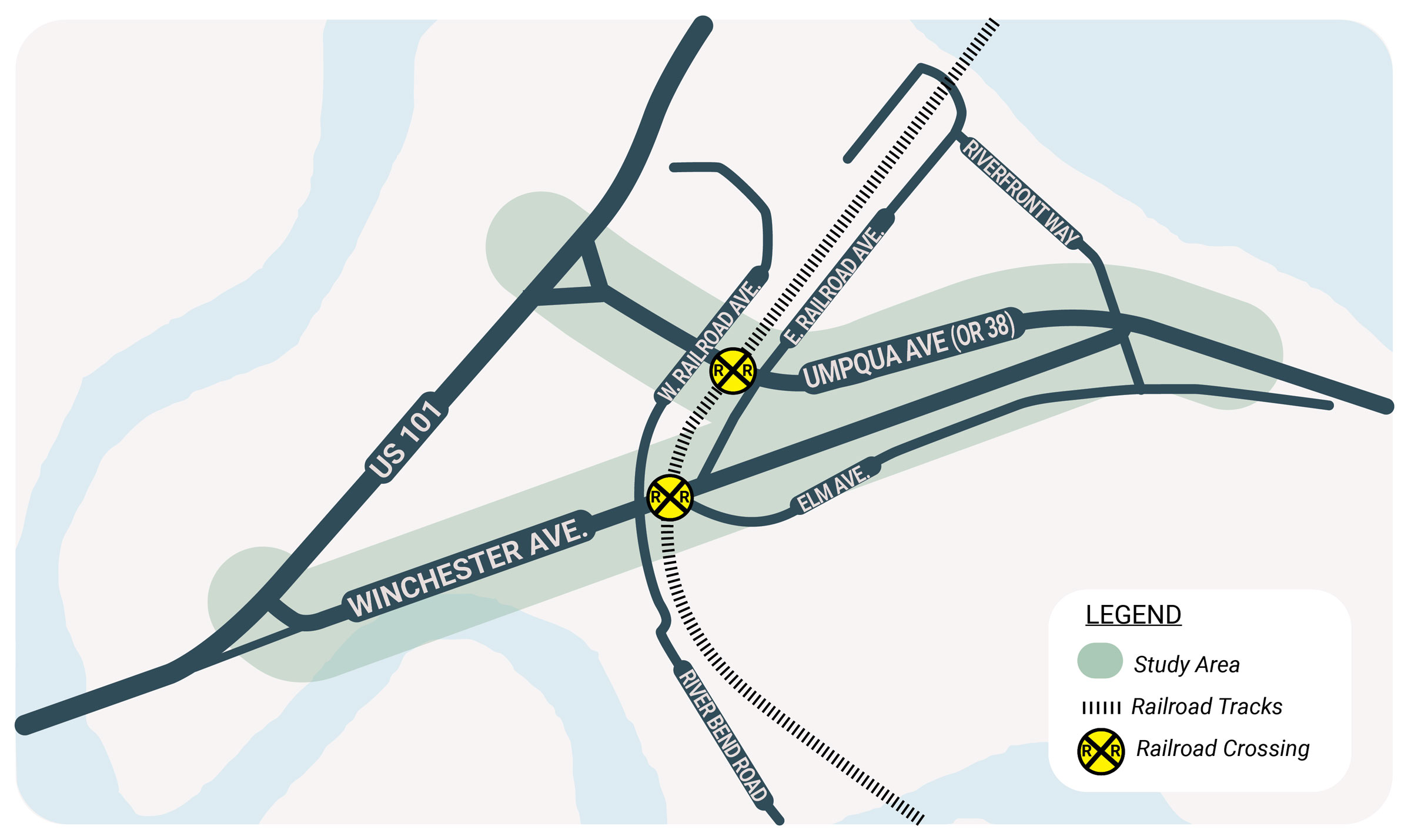
The study will deliver a Railroad Crossing Plan that will identify refinements to the Reedsport Transportation System Plan, Reedsport's action plan for implementing the recommended, Council-approved upgrades.
Railroad crossing upgrades come in many varieties and serve different purposes. This study seeks to match the right kinds of railroad crossing improvements to Reedsport's current and future needs.
The proposed projects in the study will be considered for construction if the planned container terminal receives funding to move forward. It’s anticipated that the Reedsport railroad improvements and the new terminal will be constructed simultaneously.
Click on the image to enlarge.
Study Timeline and Opportunities to Participate
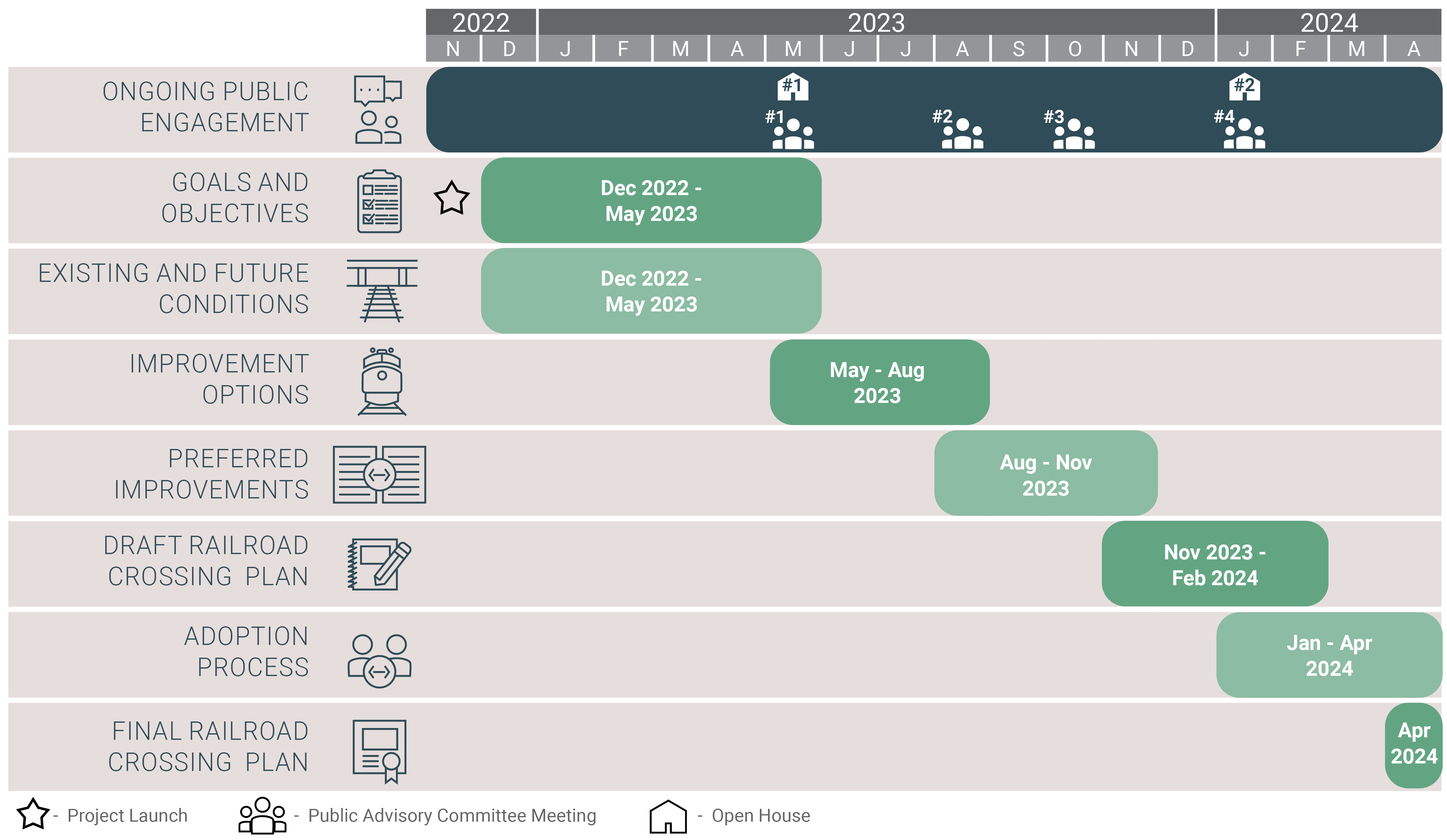
The study began in November 2022 and will conclude in May 2024. The study has two online open houses and presentations scheduled. Your input will help shape the final recommendations for railroad crossing improvements in Reedsport.
Click on the image to enlarge.
What is Happening at the Port of Coos Bay?
Trains pass through Reedsport on the Coos Bay Rail Line, which moves $460 million worth of freight annually from the Port.
Click on the image to enlarge.
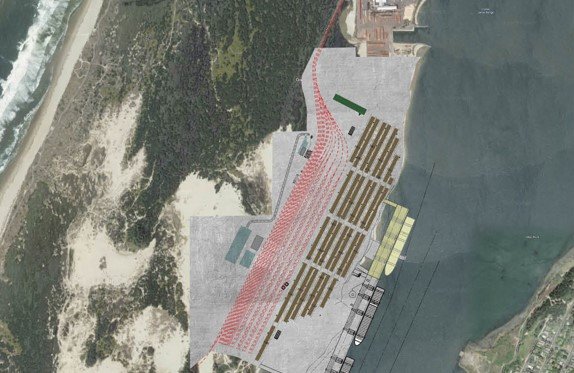
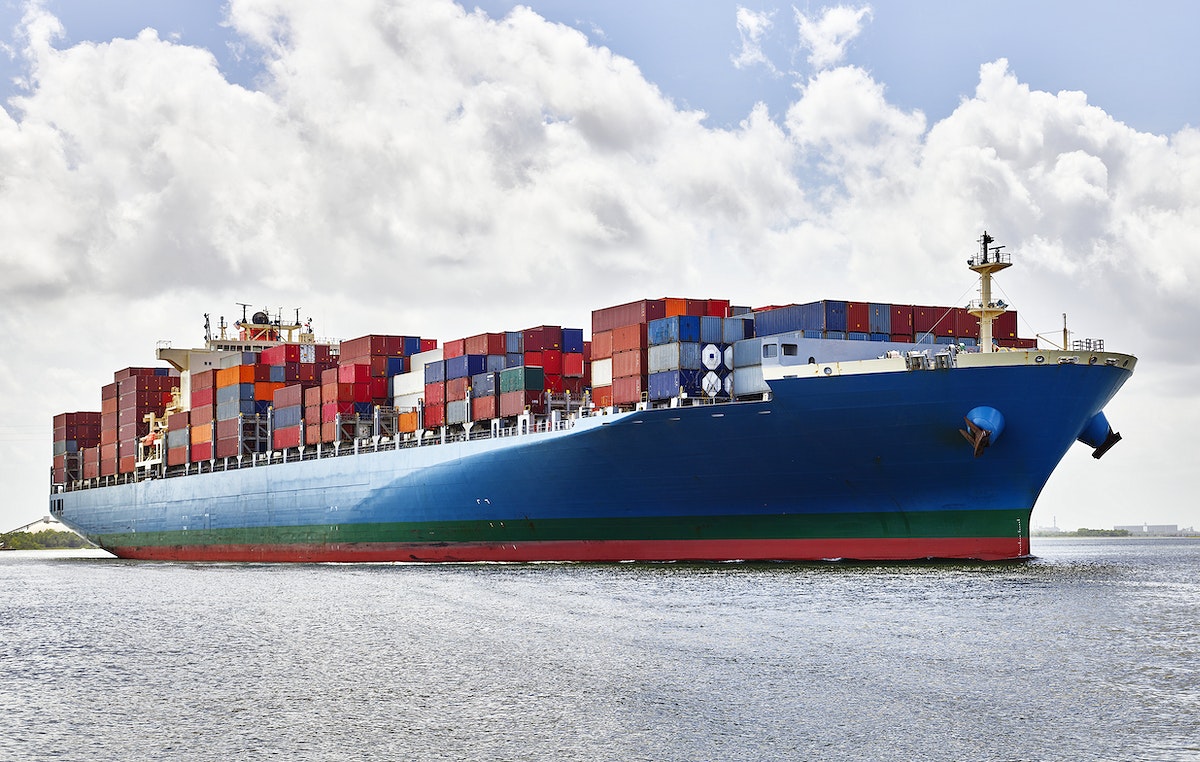
The Port is planning for a new container terminal facility which will bring jobs and further economic development to the region and, at the same time, increase the number of freight trains passing through Reedsport each day.
Click on the image to enlarge.
The new facility will be the first carbon-free marine terminal in the United States and the only deep-water port between Astoria and San Francisco. It is anticipated to accommodate 1.2 million inbound and outbound containers annually.
The Port is currently pursuing a variety of funding opportunities to advance the project. Visit the Port's website for the latest updates.
Train Traffic through Reedsport
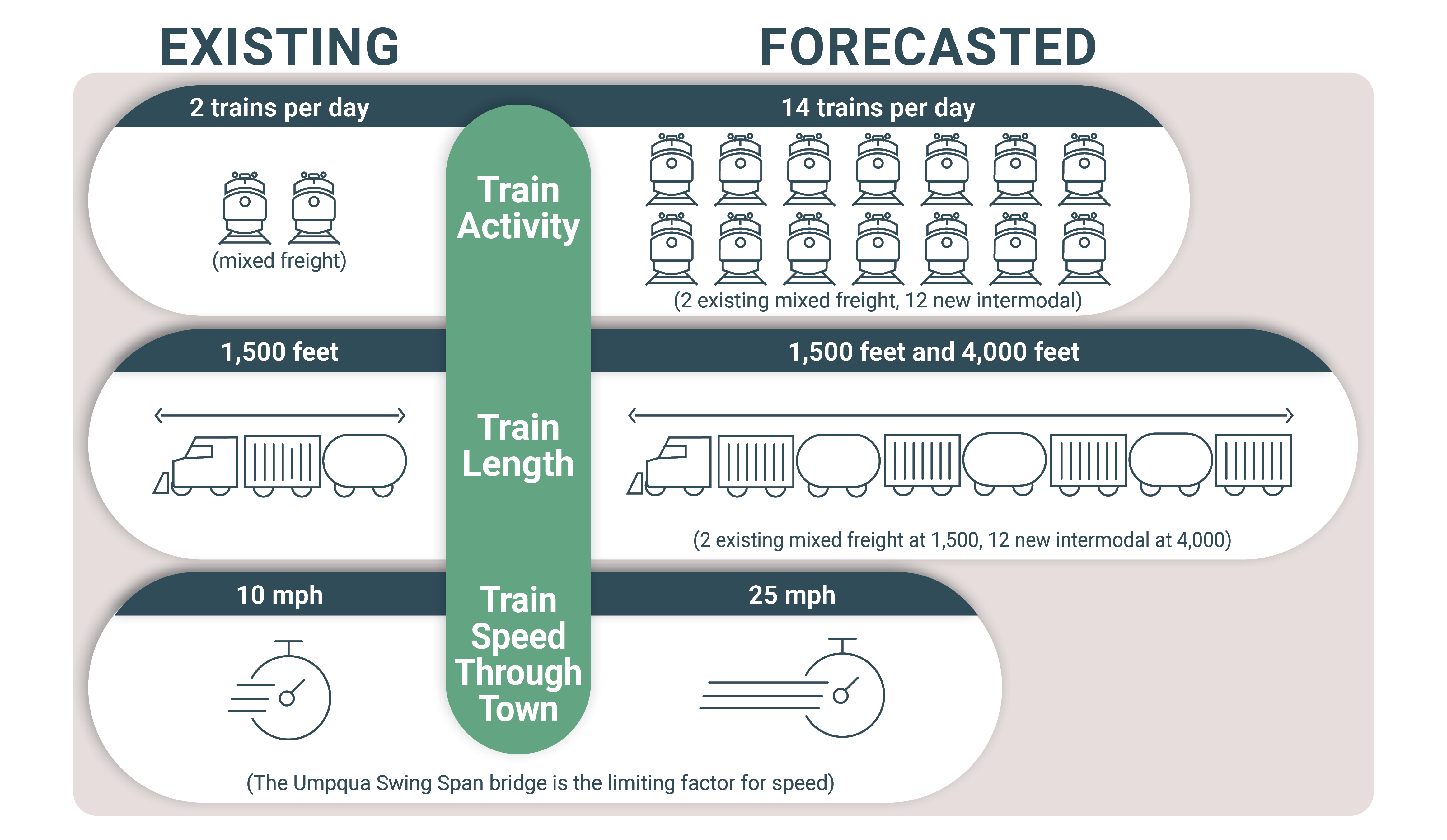
The improvements recommended by this study will improve conditions and prepare for forecasted increases in freight train traffic. In the future, trains will be longer and travel at slightly higher speeds.
Click on the image to enlarge.
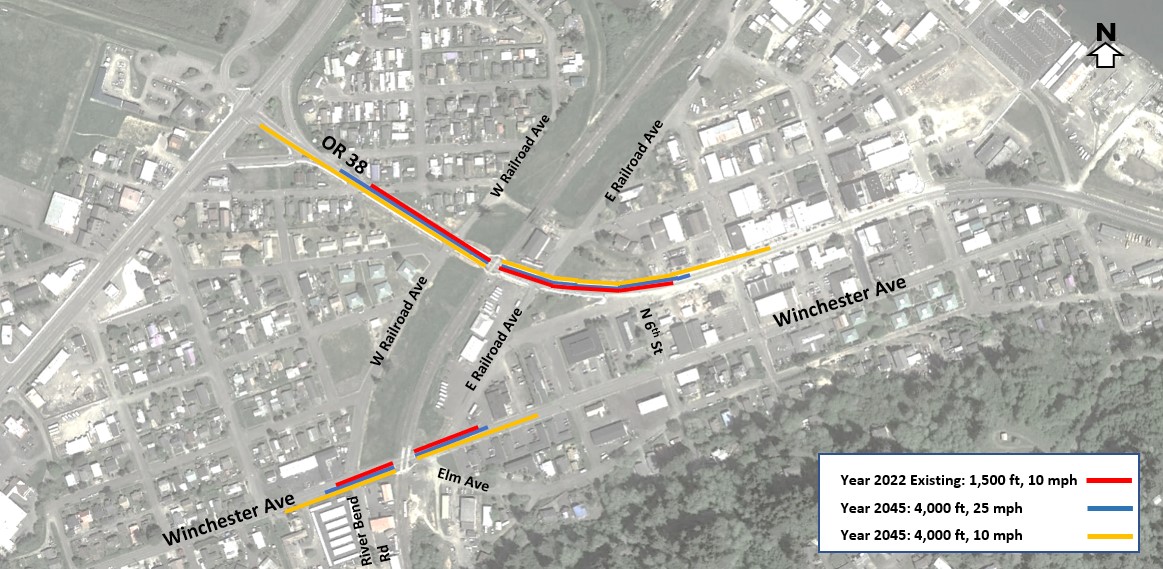
Future intermodal trains are anticipated to be approximately 4,000 feet in length and travel between 10 and 25 mph depending on the timing of upgrades to the existing Umpqua River rail bridge. As illustrated below, the rail crossing events will result in vehicles backing up on OR 38 to approximately US 101 in the eastbound direction and 5th Street in the westbound direction. Similarly, vehicles on Winchester Avenue will back up to approximately 10th Street in the eastbound direction and 7th Street in the westbound direction.
Vehicle queuing on OR 38 and Winchester Avenue are driven by train length, train speed, and vehicular demand at the time of crossing. It should be noted that any train exceeding 4,100 feet in length and traveling at 10 mph or less during the 30th highest hour of the year will result in eastbound queues on OR 38 spilling back into US 101. Out of the 8,760 hours per year, there are 30 unique peak hour time periods on OR 38 that may experience longer queues if a train crossing occurs during those specific time periods (e.g., an August Saturday afternoon with peak recreational traffic in the midday).
Click on the image to enlarge.
Review Technical Background
This winter and spring, the study team set a foundation for the next stages of the study through their work reviewing plans, policies and relevant data affecting transportation in Reedsport.
Technical Memos
Read more about the technical work during this stage.


Looking at the Range of Alternatives
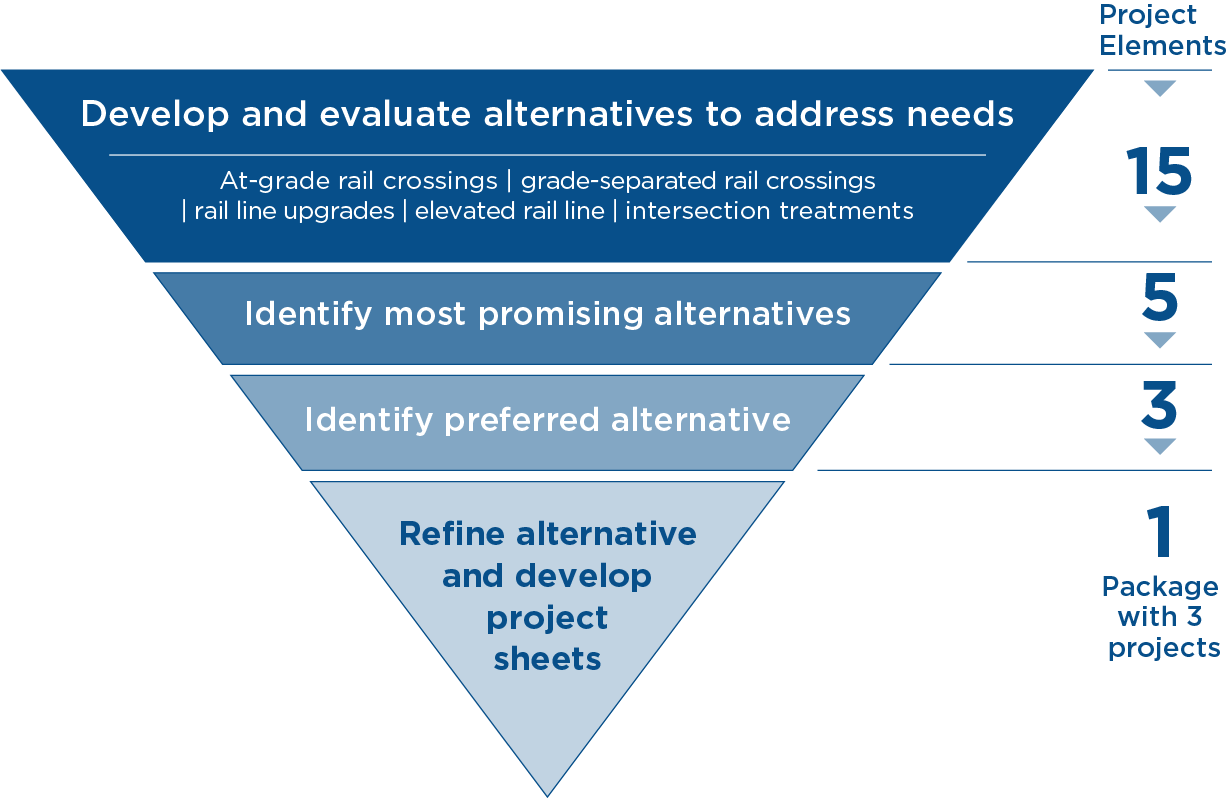
The study first identified a range of alternative solutions, sought feedback from the community, PAC, and PMT resulting in additional potential solutions, then narrowed the alternatives down to the proposed projects.
- At-grade rail crossings
- Grade-separated rail crossings
- Rail line upgrades
- Elevated rail line
- Intersection treatments
To learn more about the alternatives considered and how they scored, review Technical Memorandum #6: Alternative Analysis and Technical Memorandum #7: Preferred Improvements.
Proposed Project
The proposed projects identified here are in the early stages of development for preliminary design, environmental review, design, and construction to address the anticipated impacts of the future Pacific Coast Intermodal Port facility proposed by the Port of Coos Bay. These proposed projects were evaluated in fall 2023. The proposed projects in the study will be considered for construction if approved by the Reedsport City Council, and if the planned container terminal receives funding to move forward.
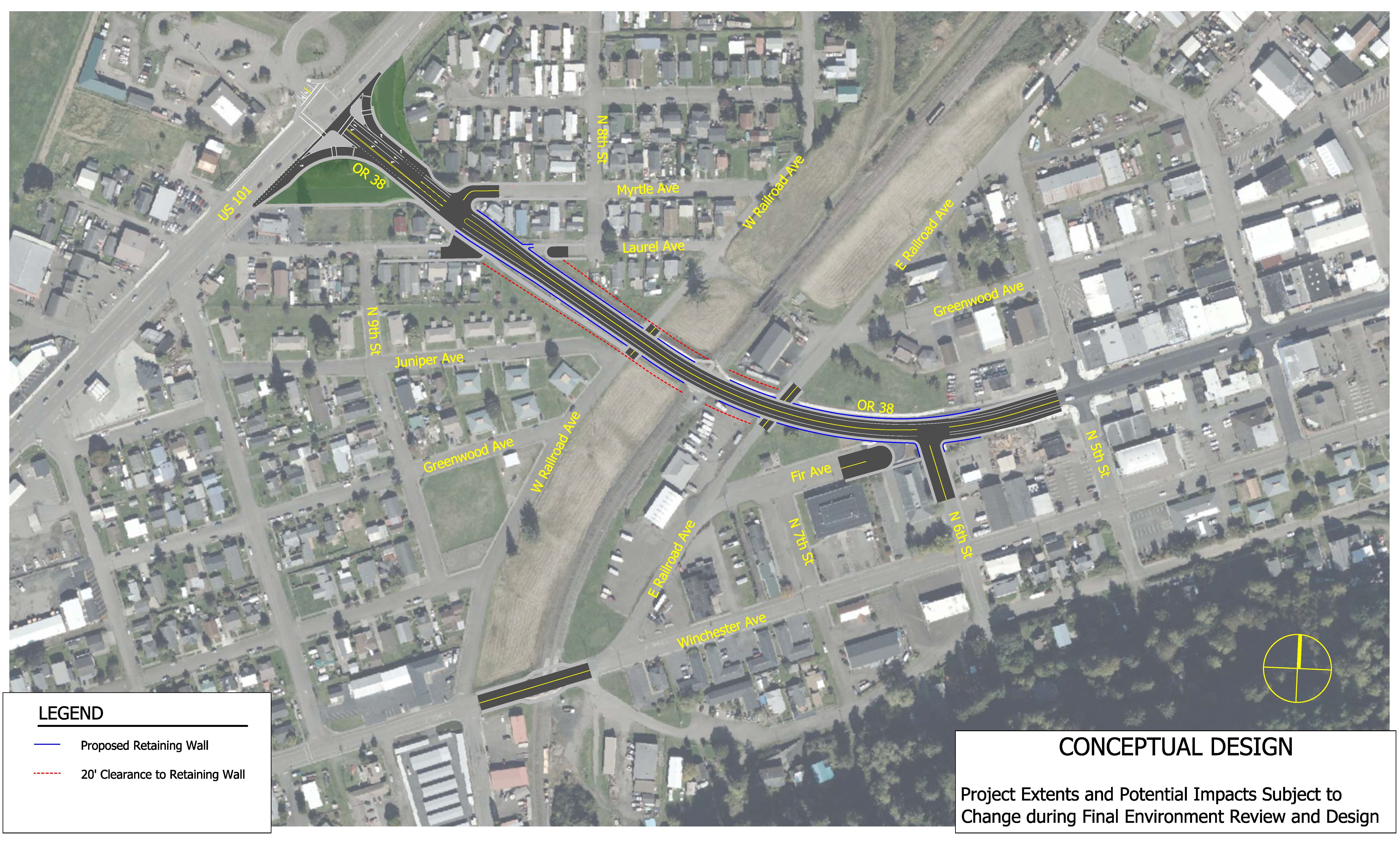
OR 38 Rail Overcrossing with Retaining Walls
Click to enlarge.
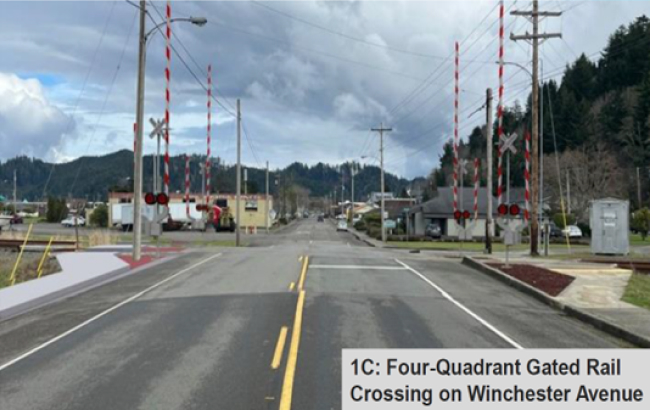
A new Four-Quadrant Gated Rail Crossing on Winchester Avenue
Click to enlarge.
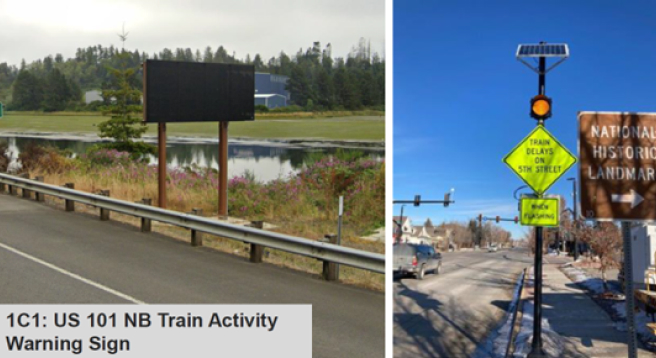
A new U.S. 101 NB Train Activity Warning for Train Crossings at Winchester Avenue
Click to enlarge.
The Draft Reedsport Rail Crossing Study provides a detailed description of the project as well as the next steps to moving the project forward.
Next Steps and Upcoming Events
The study team will spend the next several months finalizing the study and taking it through the adoption process.
Join Us for a Project Presentation

5 p.m.
Reedsport City Hall
The presentation will also be available to view online. Visit the study website to access the live meeting.
Learn more about the draft Railroad Crossing Plan and preferred alternative during a live presentation held in-person at the Reedsport City Hall.
Have comments on the proposed projects? Let us know! Submit a Comment
Implementation Plan
Throughout all steps of the implementation process, it is essential to continue to seek input to refine and design the preferred refined improvement package of projects in a manner that respects the cultural and historic significance of the area. The following is the proposed implementation plan from adoption of this study into the City of Reedsport TSP and the Oregon Highway Plan.
- Now that we are at the end of the concept planning phase, the proposed improvements identified in this study will now be considered for adoption.
- Following the adoption of this study, the Port of Coos Bay will seek to:
- secure funding,
- conduct further environmental reviews, and
- work collaboratively with ODOT and the City of Reedsport to design and ultimately construct the identified rail, highway, and local system multimodal improvements.
- The Port of Coos Bay will seek funding to construct the proposed Pacific Coast Intermodal Port facility and the associated mitigation, including rail, highway, and local transportation improvements identified in the Reedsport Rail Crossing Study ($42.8M to $49.2M in 2030 dollars).
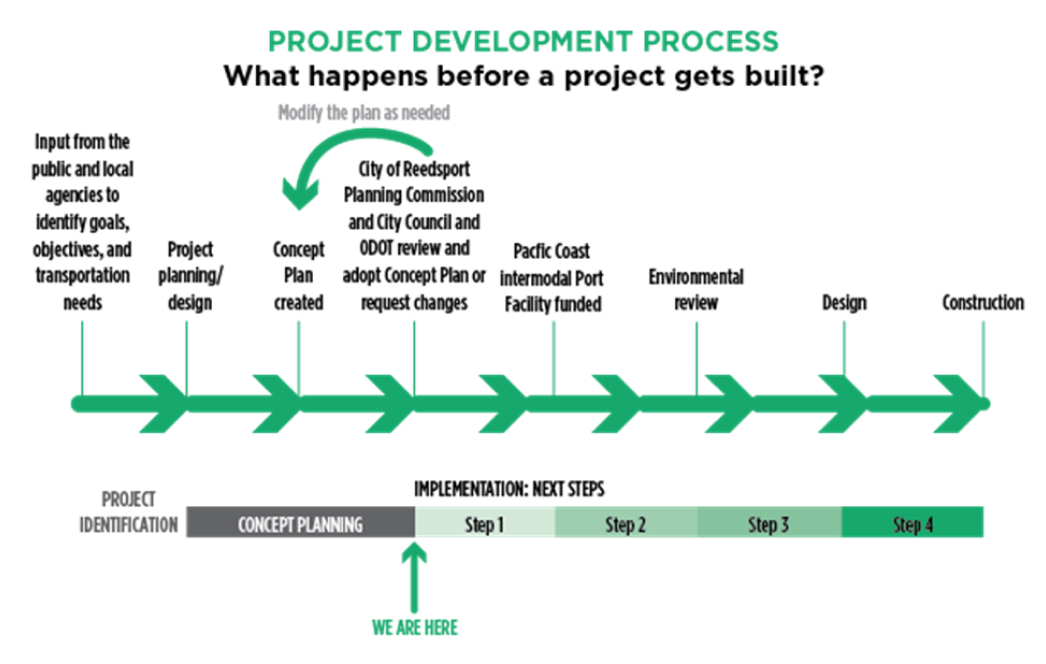
Click to enlarge.
- Input from the public and local agencies to identify goals, objectives, and transportation needs
- Project planning/design
- Concept Plan Created
- City of Reedsport Planning Commission and City Council and ODOT review and adopt Concept Plan or request changes
- Pacific Coast intermodal Port Facility funded
- Environmental Review
- Design
- Construction